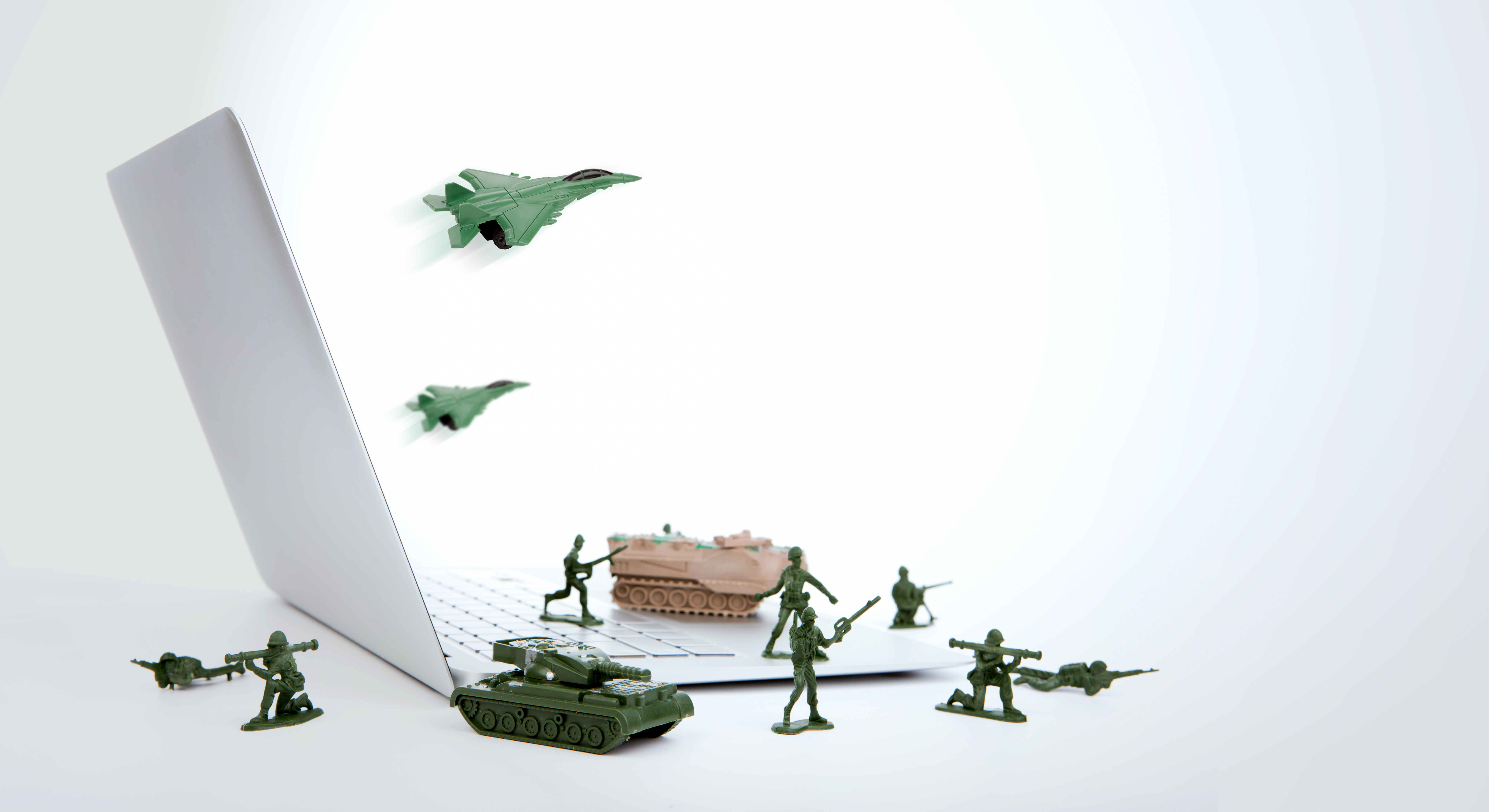
Australia's 2026 Defence Strategy Signals a New Era of National Security Focus
Australia’s approach to national security is entering a new phase, as the government unveils its 2026 National Defence Strategy against the backdrop of an increasingly volatile global landscape.
Framed by policymakers as a response to a more “dangerous and unpredictable” world, the strategy reflects growing concern over rising geopolitical tensions, shrinking warning times for conflict, and a more contested Indo-Pacific region. In this context, Australia is recalibrating not just its military capability, but its broader approach to national resilience.
At the heart of the strategy is a clear shift in mindset. Defence is no longer viewed solely through the lens of military capability, but as part of a wider, whole-of-nation approach to security, where resilience, preparedness and coordination across sectors play an equally critical role.
This shift is underpinned by a significant increase in investment. The Australian Government has committed tens of billions in additional defence funding over the coming decade, with total expenditure projected to reach approximately $425 billion. Spending is expected to rise steadily as a share of GDP, reflecting the scale of the challenge facing policymakers as they respond to a rapidly evolving threat environment.
The investment is designed to accelerate the development of advanced capabilities that align with the realities of modern conflict. Greater emphasis is being placed on long-range strike systems, integrated air and missile defence, and undersea warfare, alongside a growing focus on autonomous and uncrewed technologies. These capabilities are intended not only to enhance operational effectiveness, but to strengthen Australia’s ability to deter potential threats in an increasingly complex region.
Alongside capability development, the strategy places renewed emphasis on sovereign defence capacity. Strengthening Australia’s domestic industrial base is seen as essential to reducing reliance on external supply chains, particularly at a time when global disruption has exposed vulnerabilities across critical sectors. Building resilience at home is therefore positioned as a cornerstone of future defence planning.
This focus on self-reliance does not come at the expense of international cooperation. On the contrary, the strategy reinforces the importance of partnerships, particularly across the Indo-Pacific, where shared security challenges continue to drive closer alignment between allies. However, there is a clear recognition that Australia must be prepared to act with greater independence where required.
Technology is another defining feature of the strategy. Lessons from recent global conflicts have accelerated the integration of advanced systems, from drones and autonomous platforms to secure communications and space-based capabilities. These technologies are reshaping the nature of defence, enabling faster decision-making, greater precision and enhanced situational awareness.
Yet while the direction of travel is clear, attention is increasingly turning to the pace of delivery. In a security environment where threats are evolving rapidly, the effectiveness of the strategy will depend not only on long-term planning, but on how quickly capabilities can be deployed and integrated. The challenge for government and industry alike will be ensuring that ambition is matched by execution.
For the wider security sector, the strategy reinforces the idea that national security now extends far beyond traditional defence boundaries, encompassing infrastructure, supply chains, technology and cross-sector collaboration. As a result, the role of security professionals is expanding, with greater emphasis on resilience, risk management and preparedness across both public and private domains.
In many ways, the 2026 National Defence Strategy is less about a single policy shift and more about a broader transformation in how security is understood. As Australia navigates an increasingly uncertain world, the focus is no longer just on responding to threats, but on building the capacity to withstand them.
ICYMI Australian News: EU and Australia Agree Historic Security Pact
Continue the conversation LIVE at our UK event next April: The Security Event
Subscribe to The Security Briefing for monthly updates!

.png)